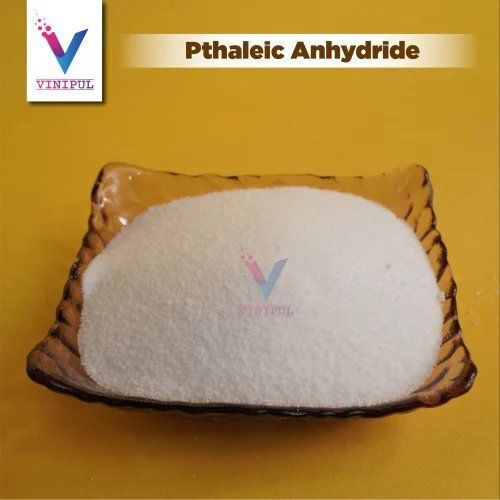
About Pthaleic Anhydride
Vinipul Chemicals Pvt. Ltd. - Manufacturing, Exporting, and Supplying Phthalic Anhydride
Vinipul Chemicals Pvt. Ltd., headquartered in Mumbai, India, is a trusted name in the manufacturing, exporting, and supplying of high-quality Phthalic Anhydride, categorized under Phosphoric Acid. Our product is widely recognized for its chemical stability, excellent purity, and suitability for a broad range of industrial applications.
Phthalic Anhydride is a versatile chemical intermediate used extensively in the plastics, resins, paints, dyes, and surfactants industries. It is a key raw material for producing alkyd resins, plasticizers (such as DOP), and polyester resins, making it essential in construction, automotive, electrical insulation, and packaging sectors.
Key Applications:
-
Plasticizer manufacturing (especially DOP for flexible PVC)
-
Alkyd resins for coatings and paints
-
Polyester resins for fiberglass-reinforced products
-
Pigments and dyes
-
Pharmaceutical and agrochemical intermediates
At Vinipul Chemicals, we ensure that every batch of Phthalic Anhydride is processed and packed under strict quality control standards. We offer customized packaging solutions and maintain prompt, reliable delivery for B2B clients across India, the Middle East, Sou
theast Asia, and African regions.
Why Choose Vinipul Chemicals Pvt. Ltd.?
-
Proven expertise in manufacturing and exporting specialty chemicals
-
High-purity Phthalic Anhydride tailored for industrial-grade use
-
Certified operations (ISO, GMP) ensuring consistent quality
-
Efficient supply chain and bulk availability
-
Serving key sectors: paints, plastics, textiles, chemicals, and construction
For consistent quality and dependable supply of Phthalic Anhydride, trust Vinipul Chemicals Pvt. Ltd.a reliable partner for chemical solutions serving the needs of growing industries.
Key Features of Phthalic AnhydridePhthalic Anhydride stands out as a versatile industrial compound. It is recognized for its high purity (99% min), stable crystalline structure, and remarkable solvency in various organic solvents. The compound is corrosive in nature and requires meticulous handling and storage conditions. Notably, it finds extensive utility in the manufacture of plasticizers, alkyd resins, dyes, and pharmaceutical intermediates. Its compatibility restrictions demand careful selection of co-reactants and storage materials.
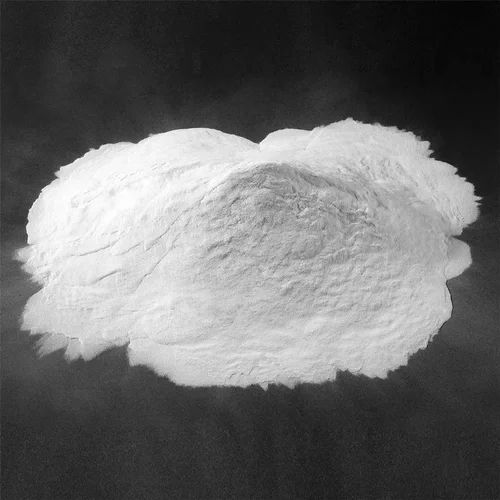
Application and UsagePhthalic Anhydride is predominantly utilized as a critical raw material in industry. It functions as a key building block for the creation of plasticizers, which impart flexibility to plastics, and is also fundamental in alkyd resin and dye production. Pharmaceutical manufacturers also employ it as an organic intermediate. Its solid form (flakes or powder) is straightforward to handle using appropriate safety equipment, but its hazardous properties require adherence to established industrial protocols.
Safe Storage and Handling GuidelinesFor best results and safety, Phthalic Anhydride must be stored in tightly sealed containers, placed in a cool, dry, and well-ventilated environment. Containers should be kept away from strong bases, oxidizers, and reducing agents to avoid violent reactions. Prolonged exposure should be avoided due to its toxic and irritating effects. Proper storage extends its shelf life to up to two years, ensuring product integrity for industrial applications.
FAQs of Pthaleic Anhydride:
Q: How should Phthalic Anhydride be stored to maintain its stability and shelf life?
A: Phthalic Anhydride should be stored in a tightly closed container, in a cool, dry, and well-ventilated area. Keeping it away from incompatible materials such as strong bases, oxidizers, and reducing agents helps ensure its two-year shelf life under proper storage conditions.
Q: What is the primary industrial use of Phthalic Anhydride?
A: The compound is primarily used as an organic intermediate in the production of plasticizers, alkyd resins, dyes, and pharmaceuticals. Its chemical properties make it valuable for various large-scale manufacturing processes.
Q: When does Phthalic Anhydride become hazardous, and what precautions should be taken during handling?
A: Phthalic Anhydride is hazardous if inhaled or ingested and exhibits corrosive properties (Hazard Class 8). It becomes particularly dangerous if heated above its melting point, where it can decompose. Always use protective gear, maintain good ventilation, and prevent contact with incompatible substances during handling.
Q: Where is Phthalic Anhydride commonly applied in industry?
A: You will find Phthalic Anhydride employed in the plastic, paint, dye, and pharmaceutical industries. It is widely used by exporters, importers, manufacturers, suppliers, and traders, especially in countries like India, for producing flexible plastics and synthetic resins.
Q: What benefits does Phthalic Anhydride offer in manufacturing processes?
A: Phthalic Anhydride offers benefits such as high purity, versatility as a chemical intermediate, and effectiveness in producing high-quality plasticizers and resins. Its properties contribute to the efficiency and durability of the final products, supporting mass-scale industrial production.
Q: How is Phthalic Anhydride typically processed in industrial applications?
A: Industries typically use Phthalic Anhydride in either flake or powder form. It is introduced as a reactant in chemical synthesis, dissolved in compatible solvents like hot water, alcohol, or benzene, and processed according to specific factory protocols for resin, dye, or plasticizer formation.









 Send Inquiry

 Send Inquiry
 Send Inquiry
 Send SMS
 Call Me Free
 English
 Spanish
 French
 German
 Italian
 Chinese (Simplified)
 Japanese
 Korean
 Arabic
 Portuguese